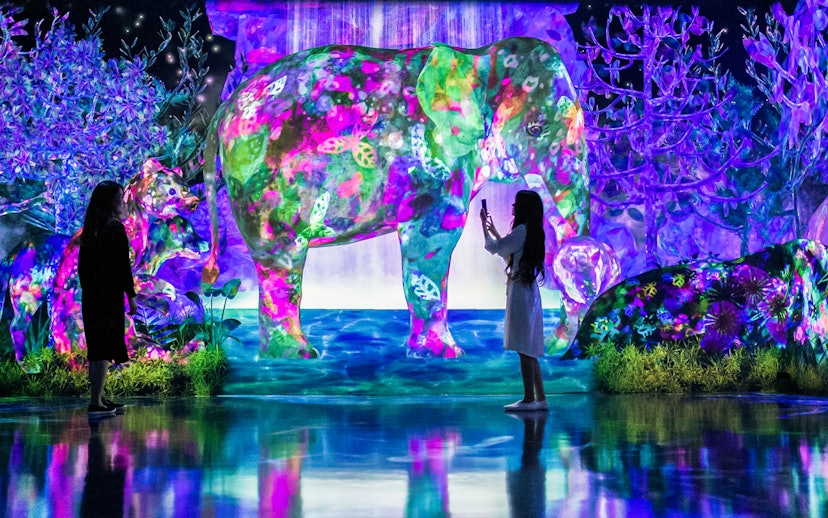
Plan Your Visit to TeamLab Forest Fukuoka
TeamLab Forest Fukuoka is an interactive digital art museum best known for turning climbing, drawing, catching animals, and moving through space into part of the artwork itself. The visit is compact but surprisingly physical, with dark rooms, uneven surfaces, and exhibits that reward active participation more than passive looking. The biggest difference between a rushed visit and a great one is arriving with enough battery, time, and energy for both main zones. This guide covers timing, tickets, layout, and the exhibits worth slowing down for.
Quick overview: teamLab Forest Fukuoka at a glance
This is a short, high-impact visit, and a little planning makes it feel much less rushed.
- When to visit: Weekday mornings are the calmest option, while afternoons, weekends, Golden Week, and July–August feel busier because families and last-minute visitors cluster into later timed slots.
- Getting in: From ¥2,400 for standard entry. There is no meaningful skip-the-line tier here because entry is already timed, so advance booking matters most on weekends, holidays, and in peak summer.
- How long to allow: 1–1.5 hours for most visitors. It stretches closer to 2 hours if you’re visiting with children, replaying the animal-catching game, or making time for photos and Graffiti Nature.
- What most people miss: The drawing station in Graffiti Nature and the quieter waterfall installation both get skipped by visitors who spend all their time in the high-energy Athletics Forest.
- Is a guide worth it? Usually, no — the experience is designed for self-guided play — but reading the exhibit instructions and using the app properly makes a bigger difference than paying for extra commentary.
🎟️ Slots for teamLab Forest Fukuoka can sell out a few days in advance during summer vacation, Golden Week, and holiday periods. Lock in your visit before the time you want is gone.
Jump to what you need
🕒 Where and when to go
🗓️ How much time do you need?
🎟️ Which ticket is right for you?
🗺️ Getting around
🌀 What happens inside
♿ Facilities and accessibility
Where and when to go
How do you get to TeamLab Forest Fukuoka?
The museum is inside BOSS EZO Fukuoka in the Momochi seaside area, next to PayPay Dome and around 6km west of central Hakata.
BOSS EZO Fukuoka 5F, Momochi, Chuo Ward, Fukuoka, Japan
- Subway: Tojinmachi Station (Kuko Line) → 12-minute walk → follow signs toward PayPay Dome and BOSS EZO Fukuoka.
- Bus: PayPay Dome / EZO Mae stop → short walk → the easiest option from Hakata or Tenjin if you want the closest drop-off.
- Taxi / rideshare: Drop-off at BOSS EZO Fukuoka → direct access to the building entrance → useful on rainy days or with children.
- Car: PayPay Dome parking → attached to the complex → regular days start around ¥300 for the first 2 hours, but event days bring heavier traffic and special rates.
Which entrance should you use?
There is one main TeamLab Forest entrance on the 5th floor of BOSS EZO Fukuoka, but visitors split into different lines depending on whether they already have a timed ticket. The mistake most people make is arriving without opening their QR code or using the restroom before entry.
- Pre-booked tickets: For visitors with a QR code and timed slot. Expect 0–10 minutes during most weekday sessions.
- Same-day tickets: For visitors buying on-site if inventory remains. Expect longer waits and fewer choices during weekends, holidays, and summer afternoons.
When is TeamLab Forest Fukuoka open?
- Daily schedule: Opening hours change by date and season, so check the day’s timetable before you travel.
- Timed entry: You must enter within the 30-minute window printed on your ticket.
- Last entry: The final bookable time slot is the practical cut-off, because walk-up admission is only sold if that day still has space.
When is it busiest? Weekends, Golden Week, and July–August are the hardest times to get your preferred slot, and later afternoon entries feel most crowded because family visits bunch up after lunch.
When should you actually go? The first weekday slots are noticeably calmer, giving you more room in the animal-hunt rooms and easier photo moments before the busier afternoon wave arrives.
How much time do you need?
| Visit type | Route | Duration | Walking distance | What you get |
|---|---|---|---|---|
Highlights only | Main projection rooms → Beating Earth → exit | 45–60 mins | ~0.5 km | Best if you mainly want to experience the signature digital installations and interactive projections without replaying the activities. |
Balanced visit | Full museum route → catching app experience → Bouncing Sphere Caterpillar House → exit | 1–1.5 hrs | ~1 km | The ideal pace for most visitors. You’ll have enough time for the interactive spaces, smartphone activities, and photo stops without rushing through the exhibits. |
Full exploration | Full museum route → replay interactive zones → extended photo stops → combo with Fukuoka Tower | 2–3+ hrs | ~1.5 km | Best if you want to revisit installations, spend longer in the interactive rooms, or combine the visit with Fukuoka Tower in the same outing. |
Which TeamLab Forest Fukuoka ticket is best for you
| Ticket type | What's included | Best for | Price |
|---|---|---|---|
E・ZO FUKUOKA teamLab Forest ticket | Entry to the interactive digital museum with access to installations like Catching and Collecting Forest, Exercise Forest, Beating Earth, and Bouncing Sphere Caterpillar House | Exploring the immersive digital-art spaces at your own pace without adding extra sightseeing stops | From ¥2,350 |
Combo: teamLab Forest + Fukuoka Tower | teamLab Forest admission plus access to Fukuoka Tower’s observation deck | Turning the visit into a broader Fukuoka city outing with both immersive art and skyline views in the same trip | From ¥3,322 |
How do you get around TeamLab Forest Fukuoka?
The layout is compact and zone-based rather than maze-like, with one main flow through the experience. It’s easy to navigate, but it’s also easy to burn too much time early and rush the more physical rooms later.
- Catching and Collecting Forest: App-based animal hunt and projection rooms → budget 25–35 minutes.
- Graffiti Nature area: Draw, scan, and release your creature into the digital ecosystem → budget 15–20 minutes.
- Athletics Forest: Bouncing spheres, balance challenges, and reactive floor pieces → budget 25–35 minutes.
- Waterfall and quieter projection spaces: Slower, more reflective installations → budget 10–15 minutes.
Suggested route: Start with the app-based catching rooms while your phone battery is full, slow down for Graffiti Nature before the line builds, and save your final energy for Athletics Forest because it’s the most physically demanding part of the visit.
Maps and navigation tools
- Map: A basic on-site brochure covers the layout and main zones → pick it up before you enter.
- Signage: Wayfinding is good enough for the route, but reading the short instructions matters because several exhibits only make sense once you know how to trigger them.
- Audio guide / app: The Catching and Collecting Forest app is the main digital tool here → download it over the venue Wi-Fi before starting if you want the full animal-hunt experience.
💡 Pro tip: Download the app and open your QR ticket before you reach the 5th-floor entrance — doing both on the spot slows your entry and cuts into the first part of the experience.
What happens inside TeamLab Forest Fukuoka?

Catching and Collecting Dinosaur Forest
Experience type: AR animal-catching game
This is the installation that sets the tone for the whole visit: instead of looking at projected animals, you actively ‘catch’ them with the app and build a digital collection as you go. Most visitors enjoy the novelty, but the detail they miss is that each captured creature unlocks information, so it works best if you pause and read rather than treating it like a race.
Where to find it: At the start of the Catching and Collecting Forest zone.
Graffiti Nature
Experience type: Draw-and-scan digital ecosystem
You color your own animal, insect, or creature on paper, then watch it appear on the projected landscape and interact with other life around it. The part most people rush past is the coloring station itself — if you spend an extra few minutes making something distinctive, it’s much easier to spot once it joins the wall-sized ecosystem.
Where to find it: In the creation area between the catching rooms and the more active installations.
Bouncing Sphere House
Experience type: Reactive movement installation
This room feels like a glowing, oversized ball pit crossed with a light show, and it’s one of the most playful parts of the museum. The spheres change color and respond to repeated movement, but many visitors don’t realize that matching colors in sequence can trigger extra visual effects, which makes the room much more fun than a quick photo stop.
Where to find it: Inside the Athletics Forest zone.
Balance Stepping Stones
Experience type: Physical balance challenge
This installation turns your balance into part of the artwork: each step tilts, shifts, lights up, and sends sound or color through the surrounding projections. What most people miss is that slower movement creates a more controlled response, so it’s better treated like a coordination exercise than a race across the platforms.
Where to find it: In the central section of Athletics Forest.
Interactive waterfall
Experience type: Motion-reactive projection
This is one of the calmest spaces in the museum, with cascading light that parts around your body as if it were real water. Visitors often skim through it on the way out, but it’s worth staying still for a moment because the visual effect is strongest when you stop moving and let the projected flow react around your silhouette.
Where to find it: Near the quieter end of the route after the more active athletics rooms.
Facilities and accessibility
- 🎒 Cloakroom / lockers: Free lockers are available for bags, and larger items that would get in the way inside the exhibit should be stored before entry.
- 🚻 Restrooms: Restrooms are on the same floor before entry, and you should use them first because there are none inside the exhibit itself.
- 🍽️ Food options: Food is not part of the exhibit, but BOSS EZO’s food hall on the lower floors is the practical place to eat before or after your slot.
- 🛍️ Gift shop / merchandise: A small shop near the exit sells TeamLab souvenirs, and you can buy a custom item based on your Graffiti Nature drawing.
- 📶 Wi-Fi: Free Wi-Fi is available to help with downloading and using the catching app before you start.
- 🪑 Seating / rest areas: Seating inside the experience is very limited, so plan on being on your feet for most of the visit.
- ♿ Mobility: This is only partially accessible because uneven surfaces and active installations are central to the experience, and wheelchairs are not permitted inside the exhibit.
- 🧠 Cognitive and sensory needs: The museum is dark, highly immersive, and full of moving projections and sound, so a first weekday slot is the easiest option if anyone in your group needs more space and a slower pace.
- 👨👩👧 Families and strollers: Strollers are not permitted inside, so families should plan to carry younger children when needed and use the stroller storage before entry.
This is a strong pick for children who like movement, drawing, and screens that respond to them, but it works best when they’re old enough to follow basic safety instructions in the active rooms.
- 🕐 Time: 1.5–2 hours is realistic with children, especially if they want to replay the catching game or spend extra time in Graffiti Nature.
- 🏠 Facilities: Lockers and pre-entry restrooms make the visit smoother, but there are no restrooms inside the exhibit once you begin.
- 💡 Engagement: Let children lead in Catching and Collecting Forest first, then slow the pace down at Graffiti Nature so they don’t spend all their energy in the opening rooms.
- 🎒 Logistics: Bring a fully charged phone, dress children in stable shoes, and avoid loose sandals because the athletics sections involve jumping, balancing, and soft moving floors.
- 📍 After your visit: Fukuoka Tower and the Momochi waterfront are easy follow-ups if the group still has energy and wants an outdoor reset.
Rules and restrictions
What you need to know before you go
- Entry requirement: You need a timed-entry ticket and must enter within the 30-minute window shown on it.
- Bag policy: Large bags, strollers, and anything awkward to carry should be left in the lockers before entry so you can move safely through the active installations.
- Re-entry policy: Re-entry is not allowed once you leave, so finish the full route, restroom stop, and app setup before you go in.
Not allowed
- 🚫 Food and drink: Food and drinks are not part of the exhibit, so plan to eat before or after your slot in the BOSS EZO complex.
- 🚬 Smoking / vaping: Smoking and vaping are not part of the museum environment, so use designated building areas only if available.
- 🐾 Pets: Pets are not suitable for the exhibit, while service animal access should be confirmed directly before your visit.
- 🖐️ Unsafe movement: Climbing, running, or ignoring staff instructions in the active rooms can put you and other visitors at risk on the uneven surfaces.
Photography
Photography is allowed throughout most of the experience, and this is one of the easiest places in Fukuoka to fill your camera roll. Flash, tripods, and bulky gear are not a good fit for the dark, reactive rooms, and they can disrupt both the projections and other visitors’ photos. A phone camera works better than a full setup here, especially in the mirror-lined and low-light spaces.
Good to know
- Shoes: Flat, stable footwear matters more than people expect here, because some of the best rooms involve bouncing, balancing, and walking on soft moving surfaces.
- Restrooms: There are no restrooms inside the exhibit, which catches families out more often than any other rule.
Practical tips
- Booking and arrival: Book ahead for weekends, Golden Week, and July–August, and arrive 10–15 minutes early so you can store bags, use the restroom, and open your QR code without eating into your slot.
- Pacing: Don’t burn all your energy in the first animal-catching rooms — Athletics Forest is the most physical part of the visit, and it lands better if you still have some stamina left.
- Crowd management: The first weekday entry usually feels best here, not because ‘early is always better,’ but because later sessions attract more family groups and the interactive rooms work better with a little personal space.
- What to bring or leave behind: Bring a fully charged phone for the catching app and photos, and leave bulky bags behind because lockers are free and you’ll move more comfortably without them.
- Shoes: Wear sneakers or other flat, stable shoes; this is one museum where footwear genuinely affects how much you can do.
- Food and drink: Eat before or after, not between exhibits — there’s no re-entry, and the easiest fallback is the BOSS EZO food hall on the lower floors once you’re done.
- Photos: Take quick photos on your first pass, then circle back to favorite rooms only if they’re still calm, because standing too long in a busy projection space can make the whole route feel shorter.
- With kids: Let them know upfront that Graffiti Nature takes a few extra minutes to set up, otherwise they may sprint past one of the most rewarding parts of the museum.
What else is worth visiting nearby?
Commonly paired: Fukuoka Tower
Distance: 500m — 7-minute walk
Why people combine them: It’s an easy same-day pairing because TeamLab gives you an indoor, high-energy visit, while the tower adds open views and a completely different pace nearby.
✨ TeamLab Forest Fukuoka and Fukuoka Tower are most commonly visited together — and simplest to do on a combo ticket. The pairing saves you from making two separate plans and turns one short museum visit into a fuller half-day outing. → See combo options
Commonly paired: Oh Sadaharu Baseball Museum
Distance: Same building — 2-minute elevator ride or short walk
Why people combine them: It’s the most convenient add-on if you want more from BOSS EZO without changing location, especially for families or baseball fans already heading to the PayPay Dome area.
Also nearby
PayPay Dome
Distance: Next door — 3-minute walk
Worth knowing: If there’s a game or event on, the whole area feels livelier, but traffic and parking also get harder, so public transit becomes the smarter choice.
Momochi Seaside Park
Distance: About 700m — 10-minute walk
Worth knowing: It’s the easiest outdoor reset after a dark, high-energy museum visit, especially if you want sea air or sunset views before dinner.
Eat, shop and stay near TeamLab Forest Fukuoka
- On-site: BOSS EZO Fukuoka food hall — casual ramen, yakitori, and other quick meal options on the lower floors; it’s more convenience-first than destination dining, but it’s the easiest post-visit choice.
- MLB Cafe Fukuoka (in the BOSS EZO complex): American-style cafe fare and drinks in a sports-themed setting; useful if you want something easy without leaving the building.
- BOSS EZO food hall ramen counters (same complex): Hakata-style ramen in a quick-service format; best if you want a fast meal right after your slot.
- BOSS EZO food hall yakitori counters (same complex): Grilled skewers and casual bites; a better fit than a full sit-down meal if you’re heading to Fukuoka Tower afterward.
- 💡 Pro tip: Eat after your visit rather than before if you have an early timed slot — the museum is short enough that delaying lunch keeps you from rushing the active rooms.
- TeamLab exit shop: TeamLab merchandise, postcards, and venue-specific souvenirs right after the exhibit; the standout buy is the custom item linked to your Graffiti Nature drawing.
- BOSS EZO souvenir counters: General complex merchandise and entertainment-themed keepsakes inside the building; useful if you want one quick shopping stop before leaving the area.
Momochi is a practical base if you want a quieter waterfront area near PayPay Dome, Fukuoka Tower, and the beach. It works well for short stays built around this side of the city, but it’s less convenient than Tenjin or Hakata if nightlife, transit flexibility, or broader sightseeing is your priority. For most first-time visitors, it’s better as a half-day outing than as the default place to stay.
- Price point: The area leans mid-range to upper-mid-range, with fewer budget choices than central Hakata or Tenjin.
- Best for: Visitors who want a calmer waterfront setting, event access near PayPay Dome, or the shortest possible trip to TeamLab Forest Fukuoka.
- Consider instead: Tenjin or Hakata if you want better dining, nightlife, and easier connections across the city during a longer stay.
Frequently asked questions about visiting TeamLab Forest Fukuoka
Most visits take 1–1.5 hours. You can stretch that closer to 2 hours if you’re visiting with children, replaying the catching game, spending extra time in Graffiti Nature, or stopping often for photos in the reactive light rooms.
Yes, booking in advance is the safer choice, especially for weekends, summer vacation, Golden Week, and holiday periods. Same-day tickets may still be available on quieter dates, but popular time slots can disappear early and you’ll have much less choice on the day.
Arriving 10–15 minutes early is usually enough. That gives you time to open your QR code, store larger bags, download or check the app, and use the restroom before entering, which matters because there are no restrooms inside the exhibit.
Yes, but keeping it small makes the visit much easier. Large bags, strollers, and awkward items should be stored in the free lockers before entry because several rooms involve bouncing, balancing, and moving through soft or uneven surfaces.
Yes, photography is allowed and this is one of the most photo-friendly attractions in Fukuoka. Flash, tripods, and bulky equipment are a poor fit for the dark projection spaces, so a phone camera or compact camera is the most practical setup.
Yes, groups can visit, and larger private arrangements may also be possible by request. Timed entry helps keep the experience manageable, but smaller groups usually move through the interactive rooms more smoothly than large ones, especially in the active zones.
Yes, it’s one of the strongest indoor family attractions in Fukuoka. Children usually love the catching game, glowing sphere rooms, and drawing-based installations, though the visit works best if they can follow basic safety instructions and handle a dark, high-sensory environment.
No, not fully. Wheelchairs are not permitted inside the exhibit because uneven surfaces and physical interaction are central to the design, so this is not a good fit for visitors who need step-free access throughout the experience.
Yes, food is easy to find in the same complex. The simplest option is to eat in the BOSS EZO food hall before or after your visit, because there’s no re-entry once you leave the exhibit.
Wear flat, stable shoes such as sneakers. This is an active museum, not a stand-and-look gallery, so loose sandals, heels, or anything slippery can make the bouncing and balance-based installations uncomfortable or unsafe.
No, re-entry is not allowed. That’s why it’s worth using the restroom, sorting lockers, and checking your phone battery before you enter, especially if you’re visiting with children.
Yes, it’s one of the best rainy-day attractions in Fukuoka because it’s fully indoors and easy to reach by bus, subway, taxi, or car. It’s especially useful when beach or city walking plans around Momochi fall apart because of bad weather.